Active Roof Damage? 253-354-8081
Serving Tacoma, Seattle & the Puget Sound
253-354-8081
Roof Maintenance•5 min read•Sep 10, 2026

Why You Should Never Pressure Wash Your Roof: Safe Moss Removal Explained

P
PAC Roofing LLC
Roof Maintenance Specialist
Why You Should Never Pressure Wash Your Roof: Safe Moss Removal Explained
The Short Answer

Pressure washing an asphalt shingle roof instantly blasts away the ceramic granules that protect the asphalt from UV and water — cutting the roof's remaining lifespan in half in a single afternoon. Safe moss removal uses gentle agitation followed by an EPA-registered fungicidal treatment that kills moss down to the root system without lifting the shingles. Annual or biannual preventive treatment costs a fraction of the premature replacement caused by aggressive washing.

3,000 PSI
Typical pressure washer output — far too harsh for shingles
50%
Lifespan reduction from a single pressure wash
18–24 mo
Recommended treatment interval in Puget Sound
0 PSI
Pressure used in professional soft-wash treatment
Key Takeaways for Homeowners
  • Pressure washers instantly blast away the ceramic-coated granules that shield asphalt from ultraviolet degradation and water penetration.
  • Gentle agitation with soft-bristle tools followed by EPA-registered fungicidal treatments kills moss spores down to the root system.
  • Annual preventive treatments cost a fraction of premature roof replacements caused by aggressive surface scouring.

What Pressure Washing Actually Does to Asphalt Shingles

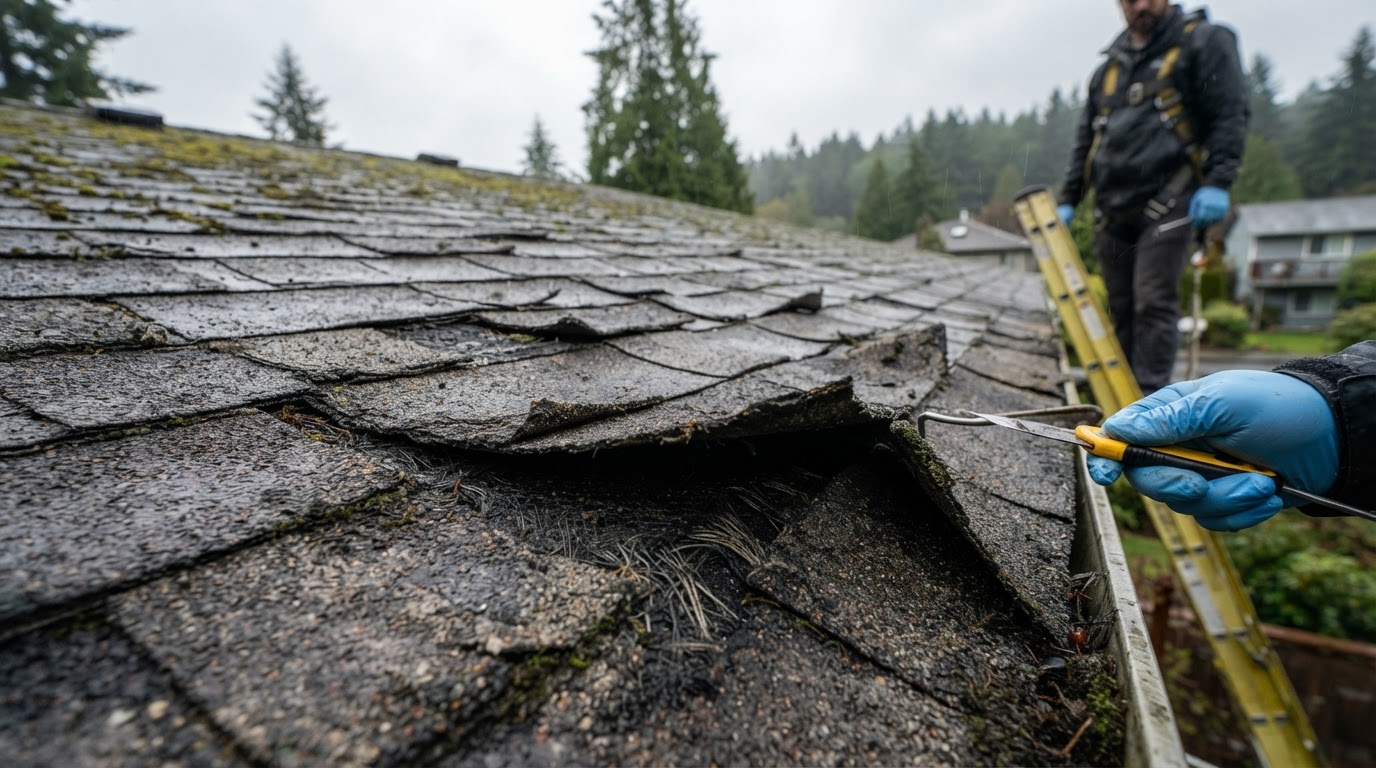
Every autumn and spring, we receive calls from panicked homeowners who hired a general handyman to 'power wash' their roof—only to discover piles of colored shingle granules in their gutters and leaks appearing inside their attic weeks later.

Asphalt shingles are coated with hard ceramic granules. These granules serve two indispensable purposes: they block UV sunlight from breaking down the brittle petroleum asphalt beneath, and they provide class-A fire resistance. A 3,000 PSI water stream gouges these granules loose instantly, cutting the remaining lifespan of your roof in half in a single afternoon.

The damage is also invisible at first. The freshly washed roof looks clean and uniform, which is exactly why the service gets sold. But the protective layer is now gone, and within one or two wet seasons the exposed asphalt begins to dry, crack, and curl.

The Safe Alternative: Roof-Safe Soft Washing

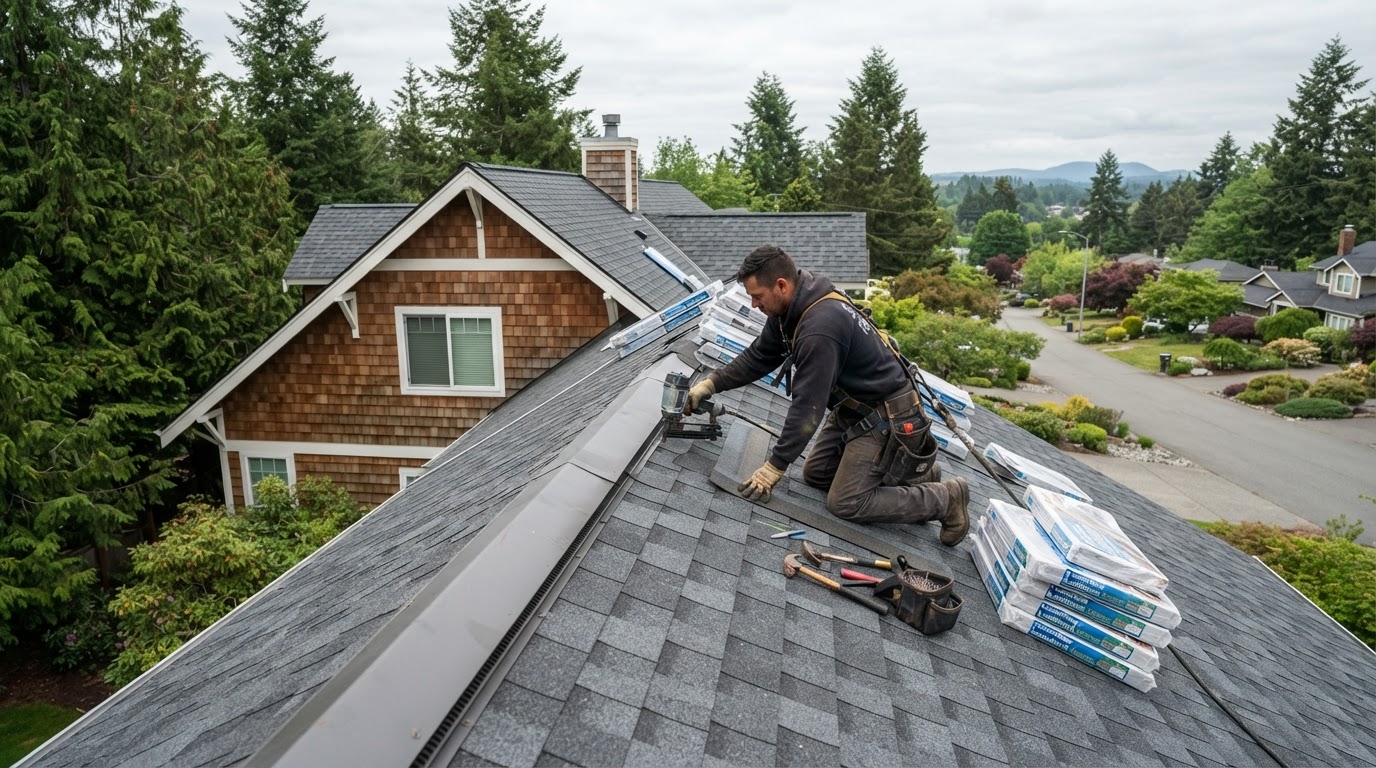
At PAC Roofing LLC, we practice roof-safe soft washing. The process is designed to kill moss at the root without ever forcing water beneath the shingle seal strip.

  • Step 1 — Gentle agitation. We sweep thick, loose moss cushions off with specialized non-abrasive tools. No scraping, no pressure.
  • Step 2 — Eco-friendly fungicidal treatment. We apply an EPA-registered moss-inhibiting solution that penetrates into the micro-fissures to neutralize spores down to the root system.
  • Step 3 — Dwell and weather. The treatment is left to work with the natural rain cycle; dead moss releases from the surface over the following weeks as the rhizoids die.
  • Step 4 — Preventive plan. We schedule a light re-treatment every 18 to 24 months so moss never re-establishes to the damaging stage.

Why the Treatment Approach Outlasts Power Washing

Pressure washing removes what you can see but does nothing about the spores embedded in the shingle micro-fissures. Within months, the moss returns — often thicker, because the washed surface is now rougher and holds spores better than before.

Soft-wash treatment kills the entire organism, root and all, and leaves a residual inhibitor on the surface. The roof stays clean far longer because there is nothing left to regrow from. Over a 5-year window, treated roofs cost less to maintain and last years longer than repeatedly power-washed ones.

How Often Should a Pacific Northwest Roof Be Treated?

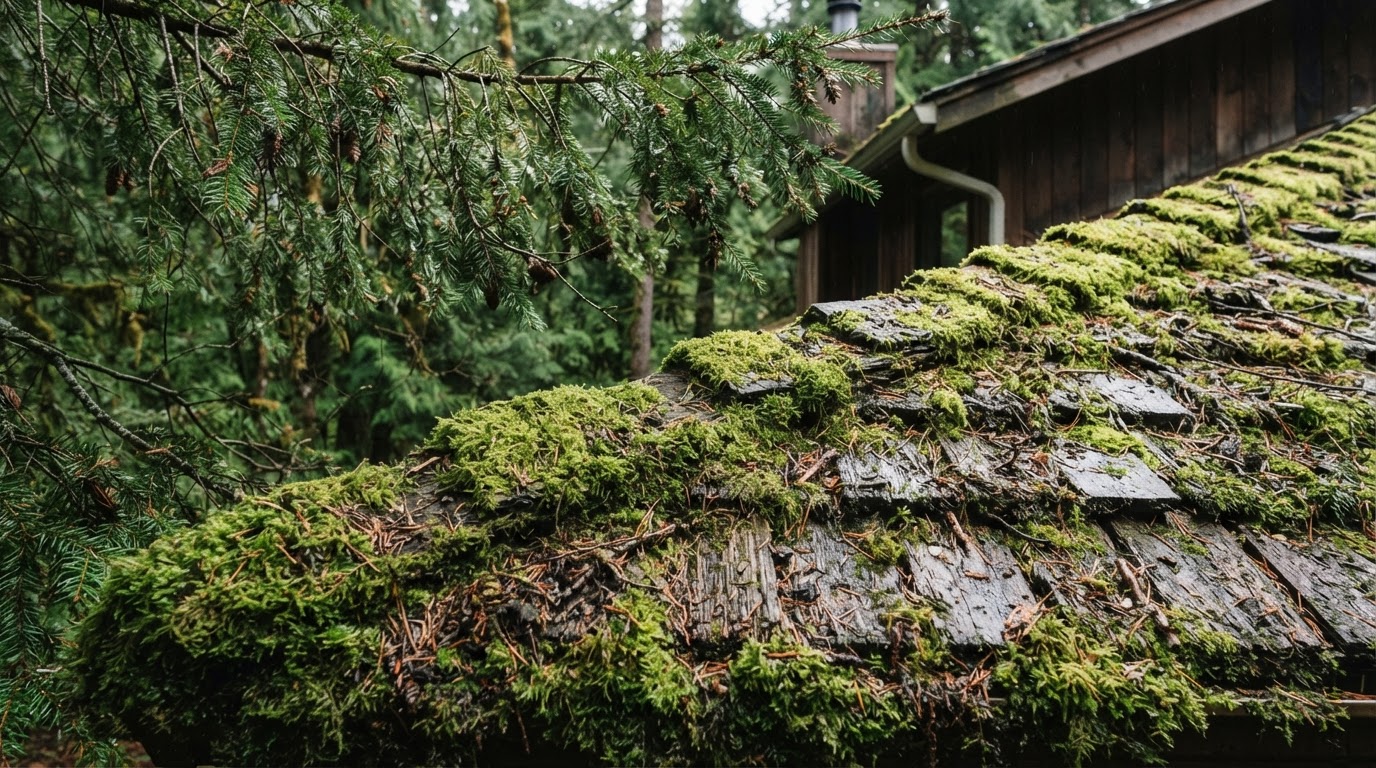
In Western Washington, the moss growth cycle is driven by our wet winters and shaded, humid microclimates under tree canopies. A roof beneath heavy Douglas fir cover needs treatment roughly every 12 to 18 months. An exposed, south-facing roof with no overhanging trees can often go 24 to 30 months between treatments.

The right cadence depends on your specific roof's sun exposure, pitch, and surrounding vegetation — which is why we assess each roof individually rather than selling a one-size schedule.
Frequently Asked Questions

Is it safe to pressure wash an asphalt shingle roof?

No. Pressure washing at any setting above a gentle garden-hose flow will blast the protective ceramic granules off asphalt shingles, exposing the asphalt to UV and water and cutting the roof's remaining lifespan roughly in half. Professional roofers use zero-pressure soft-wash treatment instead.

What is the safest way to remove moss from a roof?

Gently sweep loose moss cushions off with non-abrasive tools, then apply an EPA-registered fungicidal treatment that kills the moss down to its root system. The dead moss releases over the following weeks as the rhizoids die. No pressure washing is used at any step.

How often should I treat my roof for moss in Washington State?

In the Puget Sound region, roofs under heavy tree cover typically need treatment every 12 to 18 months, while exposed south-facing roofs can go 24 to 30 months. A professional assessment accounts for your roof's sun exposure, pitch, and surrounding vegetation.

Does soft-wash moss treatment void my shingle warranty?

No. Gentle, manufacturer-approved soft-wash treatment keeps your warranty fully intact. Pressure washing, by contrast, can void the warranty because it physically damages the shingle surface. Always confirm any roof cleaner uses a zero-pressure method.

Serving Homeowners Across the Puget Sound

PAC Roofing LLC provides the roofing services described in this guide to homeowners in these Pacific Northwest communities:

Have Questions About Your Roof?

Get straightforward recommendations from local roofing pros.

Schedule a free on-site roof inspection anywhere in Puget Sound.

Call Now253-354-8081