Active Roof Damage? 253-354-8081
Serving Tacoma, Seattle & the Puget Sound
253-354-8081
Gutters & Drainage•5 min read•Aug 2, 2026

Are Gutter Guards Worth It in the Pacific Northwest?

P
PAC Roofing LLC
Gutter Installation Lead
Are Gutter Guards Worth It in the Pacific Northwest?
The Short Answer

In tree-heavy Puget Sound neighborhoods, gutter guards reduce — but don't eliminate — cleaning. Fine-mesh guards handle pine needles and fir cones better than reverse-curve or foam styles, which clog with our fine organic debris. Guards pay off most for homeowners who can't safely climb ladders or whose gutters clog multiple times per year. But no guard is maintenance-free: they still need an annual inspection and flush, and they work best paired with seamless 6-inch gutters and oversized downspouts.

Fine mesh
Best guard style for pine needles and fir cones
Annual
Inspection and flush still needed even with guards
6-inch
Seamless gutter size guards work best with
Reduce
Not eliminate — cleaning frequency with guards
Key Takeaways for Homeowners
  • Fine-mesh stainless guards are the best fit for pine needles and fir cones in tree-heavy Puget Sound neighborhoods.
  • Gutter guards reduce but don't eliminate maintenance — plan for an annual inspection and flush even with guards installed.
  • Pair guards with seamless 6-inch gutters and 3x4-inch downspouts; a guard can't fix a capacity problem.

The Western Washington Clogging Problem

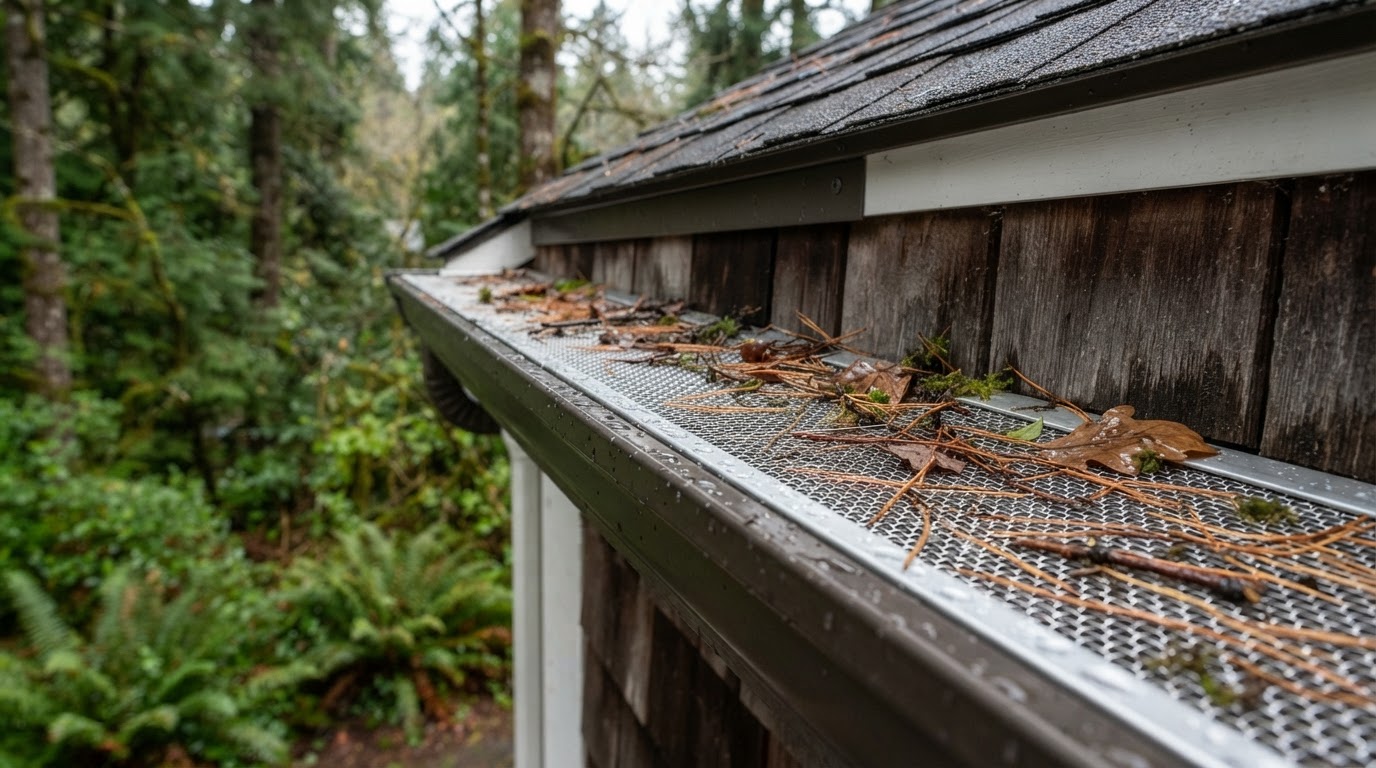
Standard open gutters in a tree-heavy Puget Sound neighborhood clog fast. Douglas fir cones, pine needles, western red cedar fronds, and moss spores wash off the roof and pack into the narrow drop outlets where downspouts meet gutters.

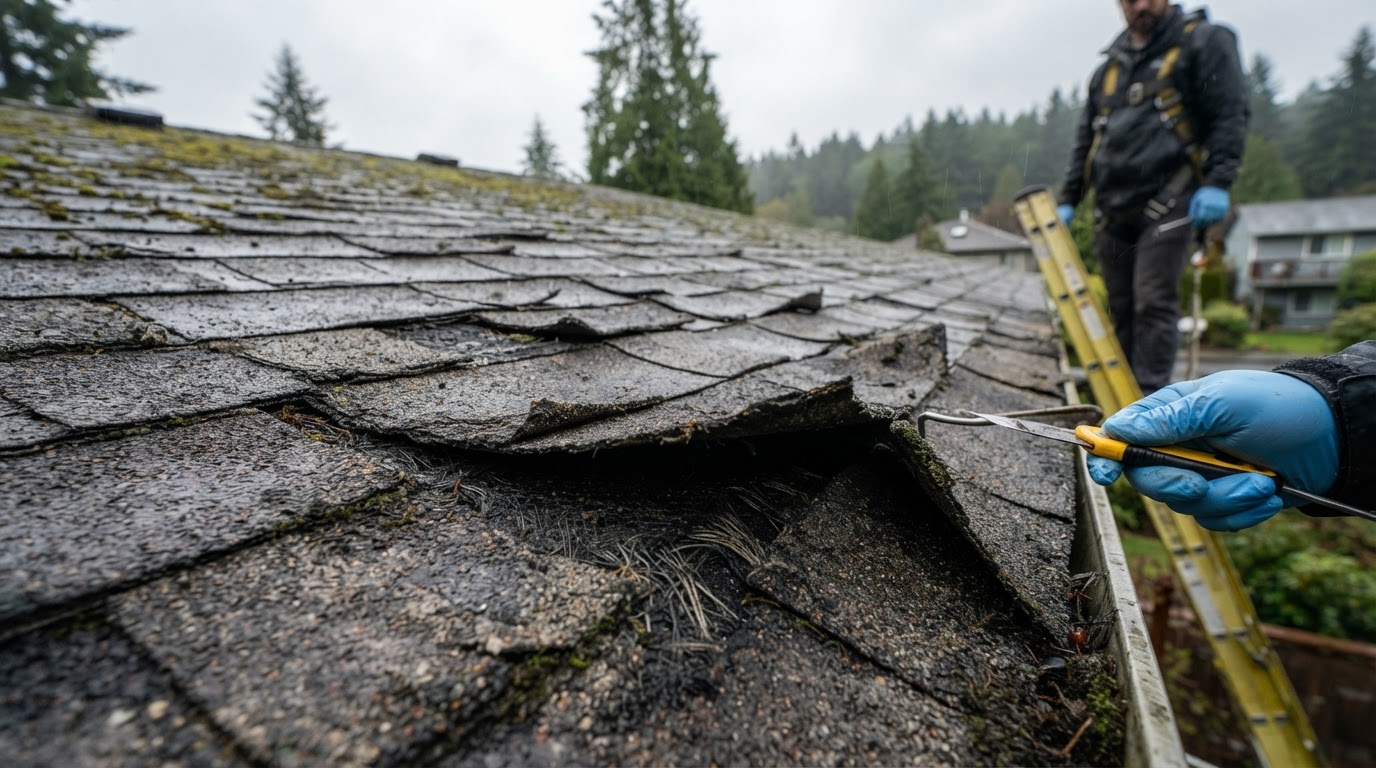
Once clogged, water overflows the gutter rim, runs behind the fascia, and backs up under the lower shingle courses. The damage is gradual and hidden — by the time the fascia is soft, the roof edge and deck have been wet for months.

Guard Styles Compared for Our Climate

Not all gutter guards perform the same in Western Washington's fine-debris environment:

  • Fine-mesh stainless guards — the best fit for pine needles and fir cones. The micro-mesh sheds debris while letting water through; small particles that pass wash out the downspout.
  • Reverse-curve (surface-tension) guards — handle large leaves but let fine needles through and can clog at the nose. Better for broadleaf neighborhoods than conifer-heavy ones.
  • Foam inserts — trap debris on top and grow moss within a season in our humidity. Not recommended for tree-heavy Puget Sound lots.
  • Brush bristle guards — catch debris but become mossy and need frequent cleaning themselves.

Guards Reduce, They Don't Eliminate, Maintenance

The honest pitch: gutter guards cut down how often you clean, but no guard is maintenance-free. Fine debris still lands on top of the mesh and needs to be brushed off annually. Small particles that pass the mesh settle in the gutter and need a flush. And if a guard is installed over a clogged gutter, the problem is just hidden, not solved.

Plan for an annual inspection and flush even with guards installed. The guard's value is reducing emergency clogs during storm season and cutting ladder climbs from several times a year to once.

When Guards Pay Off — and When They Don't

Guards are worth the investment when your gutters clog multiple times per year, when you can't safely climb a ladder, or when you're installing new seamless gutters and want to start with a low-maintenance system. They pay off least on exposed, tree-free roofs where gutters rarely clog anyway.

Whatever guard you choose, pair it with seamless 6-inch gutters and oversized 3x4-inch downspouts. A guard on an undersized 5-inch gutter with small downspouts still overflows in an atmospheric river — the guard can't fix a capacity problem.

Frequently Asked Questions

Do gutter guards work in the Pacific Northwest?

Yes, but they reduce rather than eliminate cleaning. Fine-mesh stainless guards handle pine needles and fir cones best in tree-heavy Puget Sound neighborhoods. They cut emergency clogs during storm season and reduce ladder climbs, but you still need an annual inspection and flush because fine debris settles on top and inside the gutter.

What type of gutter guard is best for pine needles and fir cones?

Fine-mesh stainless steel guards. The micro-mesh sheds pine needles and fir cones while letting water through, and small particles that pass wash out the downspout. Reverse-curve guards let fine needles through and clog, and foam inserts trap debris and grow moss in our humidity.

Are gutter guards maintenance-free?

No. Gutter guards reduce how often you clean, but no guard is maintenance-free. Fine debris still lands on top of the mesh and needs annual brushing, and small particles that pass settle in the gutter and need a flush. A guard installed over a clogged gutter just hides the problem.

Should I install gutter guards on 5-inch or 6-inch gutters?

Pair guards with seamless 6-inch gutters and oversized 3x4-inch downspouts. A guard on an undersized 5-inch gutter with small downspouts still overflows during atmospheric river storms — the guard can't fix a capacity problem. The 6-inch system carries roughly 40 percent more water volume.
Serving Homeowners Across the Puget Sound

PAC Roofing LLC provides the roofing services described in this guide to homeowners in these Pacific Northwest communities:

Have Questions About Your Roof?

Get straightforward recommendations from local roofing pros.

Schedule a free on-site roof inspection anywhere in Puget Sound.

Call Now253-354-8081