Why the Stain Is Never Below the Leak
Seeing a brown stain spread across your ceiling drywall is stressful. But climbing into the attic with a flashlight directly above the stain rarely reveals the hole in the roof. Why?
Because water follows gravity and surface tension. It enters through a cracked rubber plumbing boot or failing step flashing on a higher slope, drips onto the top chord of a roof truss, trickles down the wood framing, runs across drywall ceiling sheets, and pools in a low corner before staining your ceiling.
This is why DIY fixes aimed at the stain almost never hold. Sealing the drywall above the stain does nothing — the water is still entering 15 feet uphill and finding a new path down.
Where Puget Sound Roofs Actually Leak
After decades of diagnostic inspections across Pierce and King counties, the same handful of failure points account for the vast majority of leaks we find:
- Plumbing pipe boots — the rubber gasket around vent pipes cracks from UV exposure within 8–12 years and splits open, letting wind-driven rain run straight down the pipe.
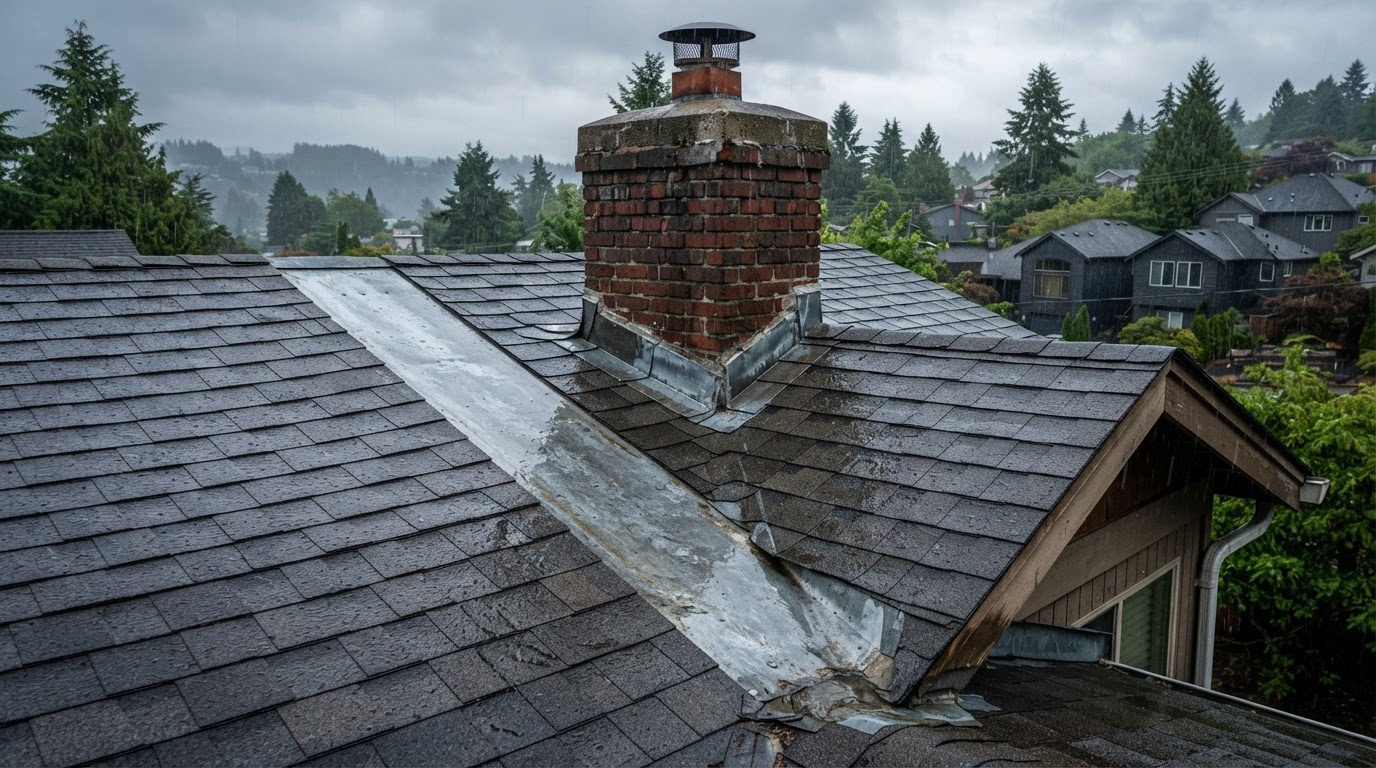
- Valley metal — the intersecting trough where two roof planes meet carries the most water volume on the roof; rusted or lifted valley metal is a top leak source.
- Chimney step and counter-flashing — the mortar joints and metal base flashing degrade, and water enters behind the chimney and travels down the framing.
- Skylight curbs — failed sealant at the curb-to-roof transition lets water pool under the flashing and wick inward.
- Dormer sidewall flashing — where a vertical wall meets the roof slope, kick-out flashing is often missing or installed incorrectly.
How a Professional Leak Inspection Actually Works
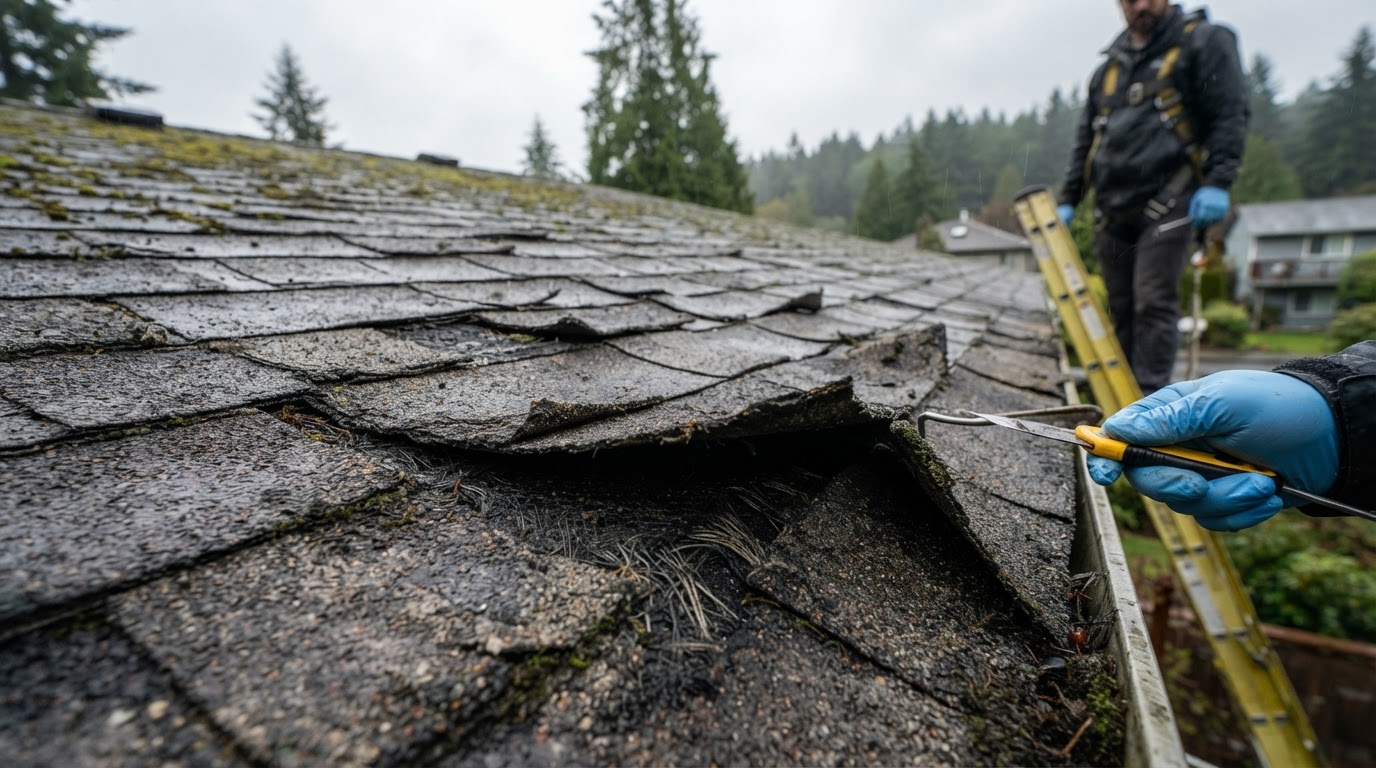
Our diagnostic inspection starts outdoors with high-risk transition zones: valleys, dormers, plumbing stacks, skylight curbs, and chimney step flashing. We look for lifted metal, cracked sealant, and missing kick-out flashing.
Next, we inspect the interior attic cavity with moisture meters and thermal imaging. A thermal camera reveals damp insulation and cold-water trails that are invisible to the naked eye, letting us trace the water path back to its true entry point rather than the visible stain.
Most pinpointed leaks can be permanently repaired in an afternoon with fresh galvanized metal flashings and ice-and-water shield, saving you from a costly full-roof replacement.
The Real Cost of Waiting
A small ceiling stain is the warning, not the problem. By the time water is visible inside, it has usually been traveling through the attic for weeks or months. The insulation above the stain is saturated, the truss top chord may be softening, and in our humid climate mold can establish within 48–72 hours of sustained moisture.
An undetected leak that would cost a few hundred dollars to repair at the flashing routinely turns into a $2,500+ interior remediation job — insulation replacement, drywall repair, and mold treatment — on top of the original roof repair. This is why we recommend an inspection at the first sign of any water intrusion, not after the second stain appears.