
Active Roof Damage? 253-354-8081
Serving Tacoma, Seattle & the Puget Sound
253-354-8081
Gutters & Drainage•5 min read•Aug 10, 2026

Downspout Extensions: The Small Upgrade That Protects Your Foundation

P
PAC Roofing LLC
Gutter Installation Lead
Downspout Extensions: The Small Upgrade That Protects Your Foundation
The Short Answer

A gutter system that dumps water right at the foundation does half a job. Downspout extensions and splash blocks carry that water at least 4 feet away from the home, preventing soil erosion, basement and crawlspace seepage, and foundation wall stress. In Western Washington's heavy rain, oversized 3x4-inch downspouts paired with solid extensions are the dependable setup. Buried French drains handle high-volume lots. The upgrade costs a fraction of foundation repair.

4 ft+
Minimum distance to discharge water from the foundation
3x4-inch
Recommended downspout size for Puget Sound homes
Fraction
Cost of extensions vs. foundation repair
150+ days
Of annual precipitation in Western Washington
Key Takeaways for Homeowners
  • Downspouts should discharge water at least 4 feet from the foundation to prevent soil erosion and seepage.
  • Oversized 3x4-inch downspouts paired with seamless 6-inch gutters handle atmospheric river storms without backing up.
  • Surface extensions, buried lines, or French drains complete the roof-to-ground drainage system and cost a fraction of foundation repair.

Gutters Catch It, Downspouts Decide Where It Goes

A flawless gutter installation that catches every drop of rain is wasted if the downspouts dump that water directly at the base of your foundation. The gutter's job is to capture water off the roof; the downspout's job is to move it safely away from the home.

When downspouts discharge at the foundation wall, all that roof water pools against the footing. Over a wet Western Washington winter, that constant saturation erodes soil, seeps into basements and crawlspaces, and stresses the foundation wall.

Why 4 Feet Matters

Building best practice and our field experience both point to discharging downspout water at least 4 feet from the foundation. Less than that, and the saturated soil zone extends back under the footing. More is better on sloped lots or homes with basements.

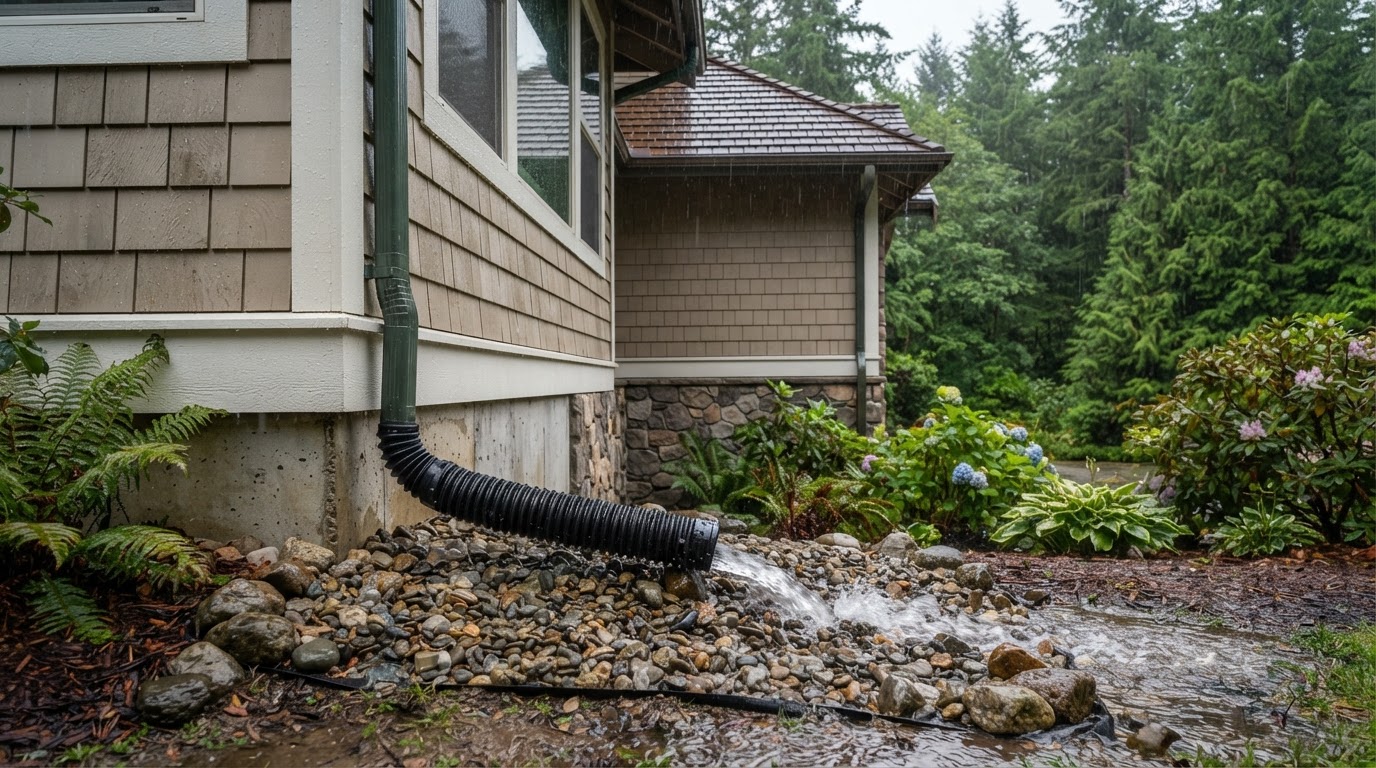
This is achieved with either surface extensions (rigid or fold-up) that carry water out along the ground, or buried drainage lines that route it to a pop-up emitter or French drain downhill.

Choosing the Right Discharge Method

The best method depends on your lot's slope, soil, and where the water can safely go:

  • Splash blocks — the minimum, deflecting water a foot or two from the downspout exit. Fine for small roofs on well-drained lots.
  • Surface extensions — rigid PVC or aluminum, or hinged fold-up styles, carrying water 4+ feet out. Affordable and visible, so clogs are obvious.
  • Buried drainage lines — underground pipe routing water to a pop-up emitter or dry well. Cleaner look, ideal for finished landscaping, but needs proper slope to avoid clogging.
  • French drains — gravel-filled trenches for high-volume lots or areas where surface discharge isn't possible.

Sizing the Downspout to Match the Gutter

Even the best extension can't help if the downspout itself is undersized. Standard 2x3-inch downspouts back up during atmospheric river storms. We recommend 3x4-inch downspouts on seamless 6-inch gutters — the larger opening moves water fast and resists clogging with pine needles and fir cones.

Pair the right downspout size with a 4-foot discharge and your roof-to-ground drainage system actually completes its job: water off the roof, into the gutter, down the downspout, and away from the foundation.

Frequently Asked Questions

How far should downspouts extend from the house?

At least 4 feet from the foundation. Discharging closer than that lets the saturated soil zone extend back under the footing, causing soil erosion, basement or crawlspace seepage, and foundation wall stress. On sloped lots or homes with basements, more distance is better.

What is the best way to direct downspout water away from the foundation?

Surface extensions (rigid or fold-up) carry water 4+ feet out and make clogs obvious. Buried drainage lines route water to a pop-up emitter for a cleaner look. French drains handle high-volume lots. The right choice depends on your lot's slope, soil, and where water can safely discharge.

What size downspouts are best for Pacific Northwest homes?

Oversized 3x4-inch downspouts paired with seamless 6-inch gutters. Standard 2x3-inch downspouts back up during atmospheric river storms. The larger 3x4-inch opening moves water fast and resists clogging with pine needles and fir cones, which are common in Western Washington.

Can bad downspouts really damage my foundation?

Yes. Downspouts that dump water at the foundation let roof water pool against the footing, eroding soil, seeping into basements and crawlspaces, and stressing the foundation wall over a wet winter. Extensions and proper discharge carry that water safely away and cost a fraction of foundation repair.

Serving Homeowners Across the Puget Sound

PAC Roofing LLC provides the roofing services described in this guide to homeowners in these Pacific Northwest communities:

Have Questions About Your Roof?

Get straightforward recommendations from local roofing pros.

Schedule a free on-site roof inspection anywhere in Puget Sound.

Call Now253-354-8081