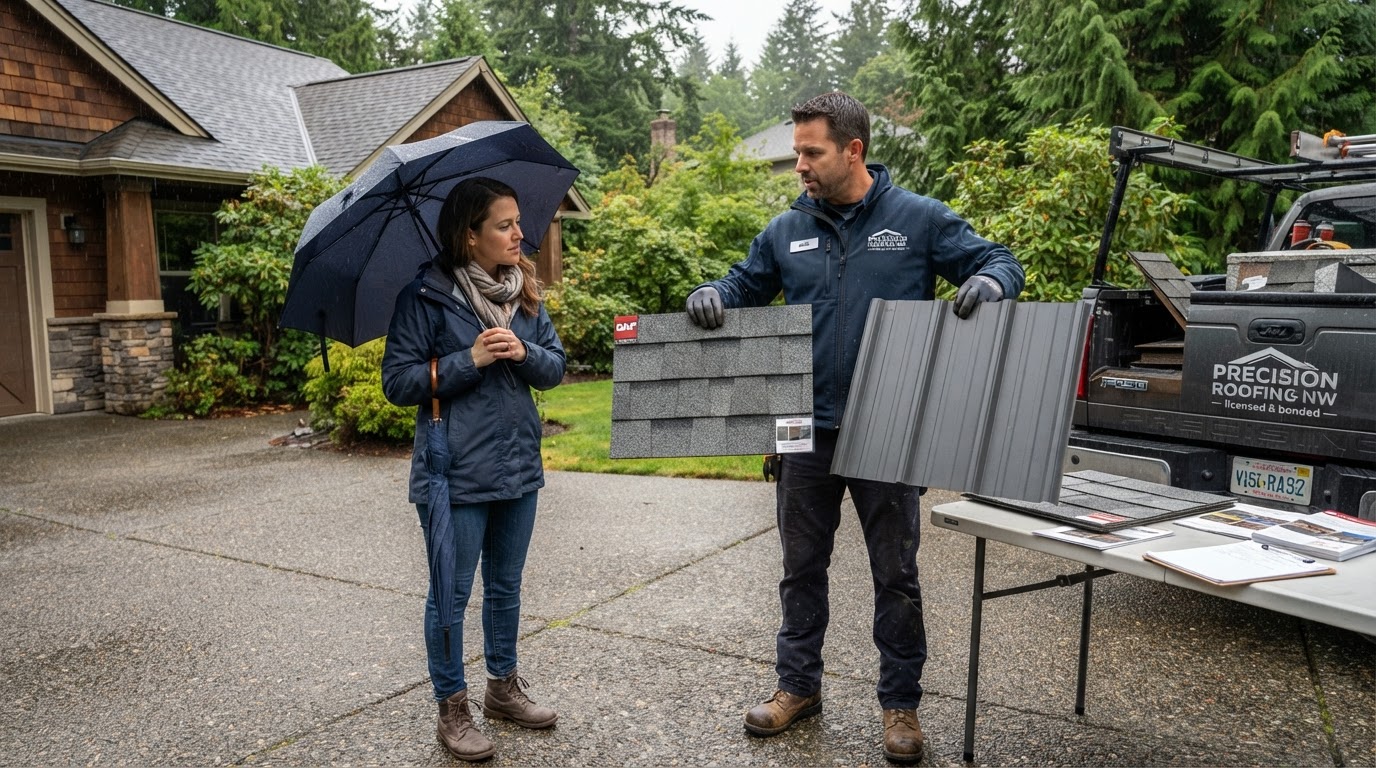
How Western Washington Weather Tests Every Material
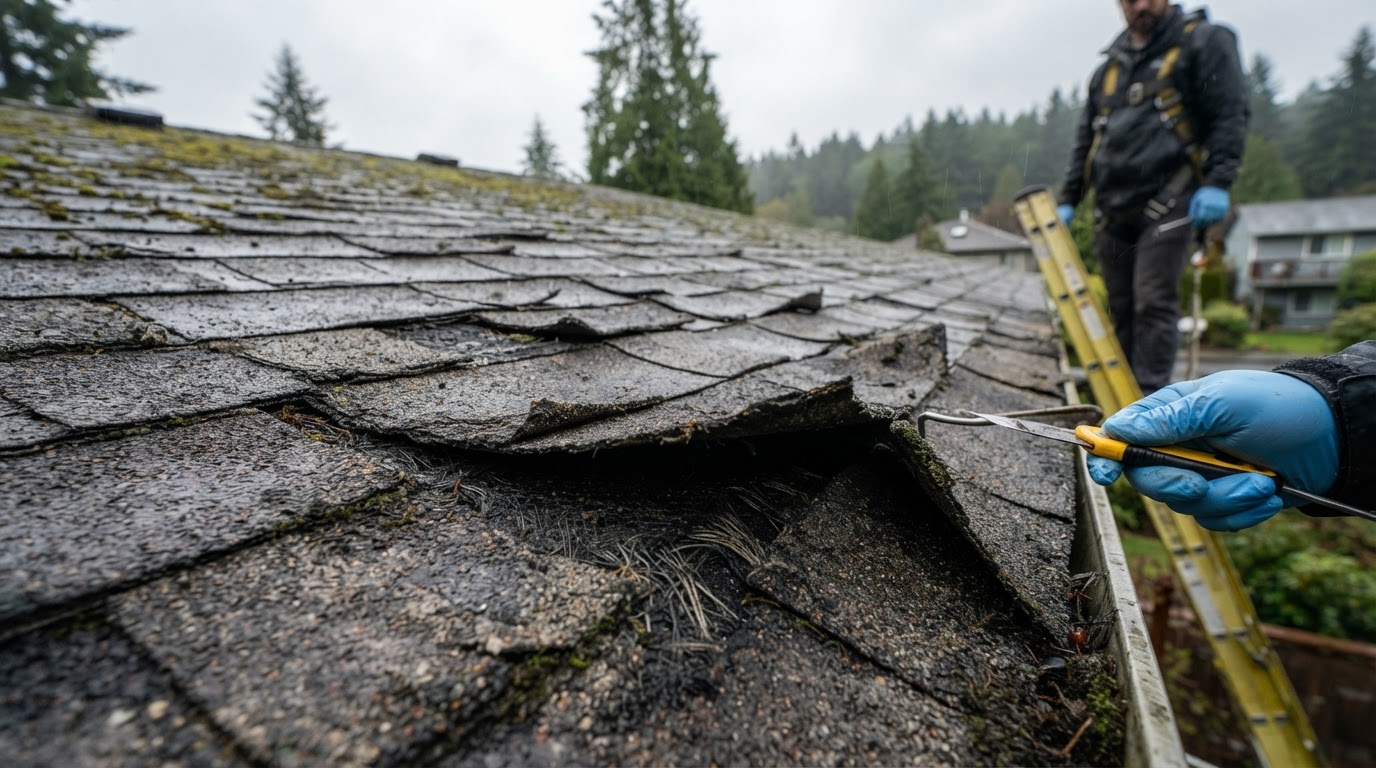
Our climate stresses roofing materials in three ways that drier regions don't: 150+ days of annual precipitation keeps surfaces wet for long stretches, maritime humidity feeds moss and lichen into any porous surface, and dense evergreen shade prevents the sun from drying roofs out between storms.
That means a material's real-world performance here often differs from its advertised rating. The same product that lasts 50 years in a dry climate may need replacement by year 25 on a shaded Puget Sound roof.
Asphalt Shingles: The Dependable Default
Architectural (laminated) asphalt shingles are the most common choice in Western Washington for good reason. They last 22 to 28 years with proper ventilation, shed water well, resist wind uplift, and offer the best cost-to-lifespan ratio for most homeowners.
3-tab shingles cost less but their flat profile holds moisture and they typically last only 15 to 18 years here. Designer and luxury shingles add curb appeal and a few extra years but only pay off when paired with upgraded ventilation and synthetic underlayment.
Metal Roofing: The Long-Term, Moss-Proof Option
Metal roofing is the standout choice for Western Washington's moss problem. Moss rhizoids cannot root into a steel or aluminum surface, so a metal roof stays clean where an asphalt roof would need regular treatment. It also sheds water instantly and handles our windstorms well.
The tradeoff is upfront cost — metal is significantly more expensive than asphalt. But with a 40 to 60+ year lifespan, it can be the most cost-effective option for homeowners planning to stay long-term or for heavily shaded lots where moss is a constant battle.
Cedar Shake and Concrete Tile: Niche Choices
Cedar shake has beautiful natural character but faces real challenges in our humidity. Moss and lichen work into the wood fibers faster than in drier climates, giving a treated shake roof 18 to 25 years and an untreated one only 12 to 15. It needs regular treatment to reach the upper end of that range.
Concrete tile is extremely durable and fire-resistant but very heavy — many homes need structural reinforcement to support it. It's also moss-prone in our shade, with moss rooting into the porous surface and requiring treatment. Both materials have niche appeal but demand more maintenance than asphalt or metal in the Puget Sound.
Matching the Material to Your Goals
The right choice depends on three factors: your budget, how long you plan to own the home, and your roof's sun exposure. For most homeowners, architectural asphalt is the dependable default. For long-term owners or shaded lots where moss is relentless, metal pays off. For specific architectural styles, shake or tile may be worth the extra maintenance.
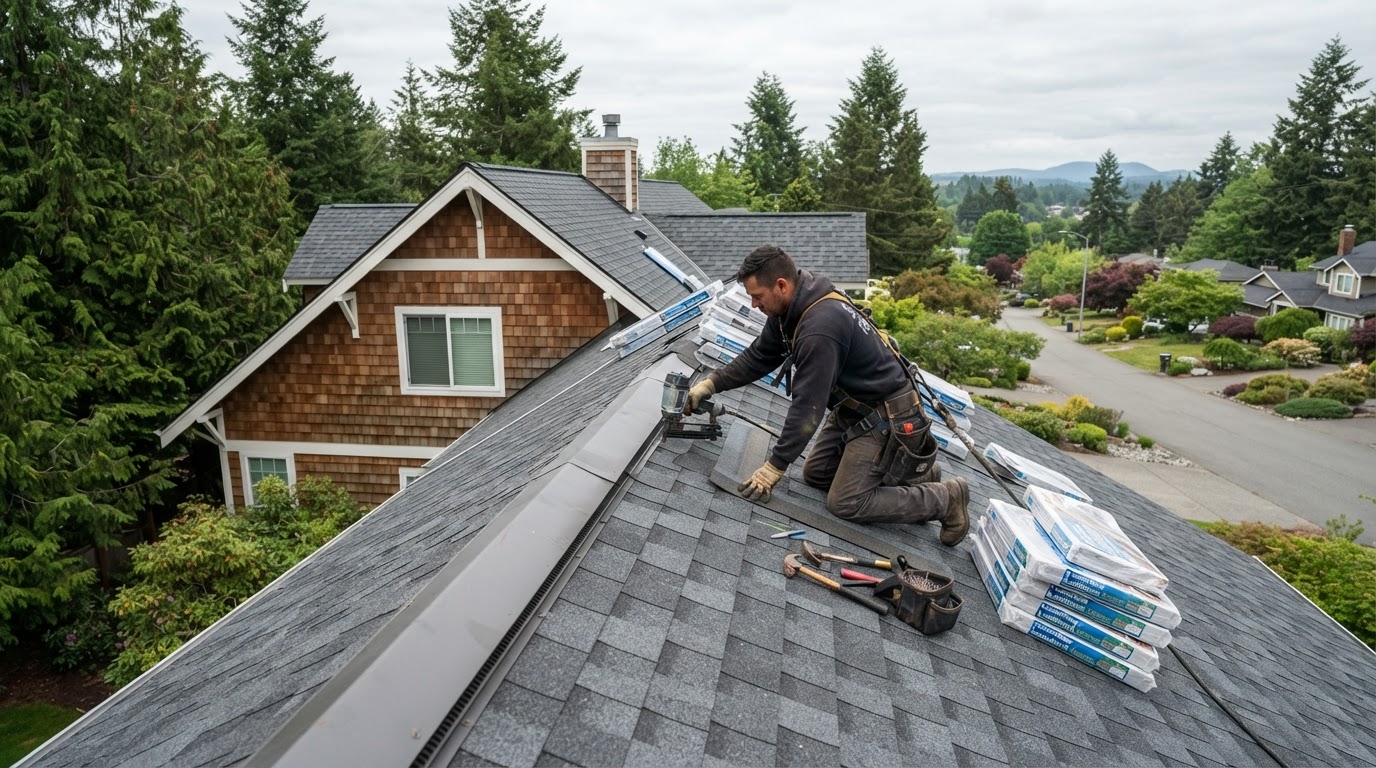
Whatever you choose, the installation matters as much as the material. Synthetic underlayment, balanced ventilation, and ice-and-water shield at the eaves determine whether you reach the material's rated lifespan — and that's true for every material on this list.